

Corporate 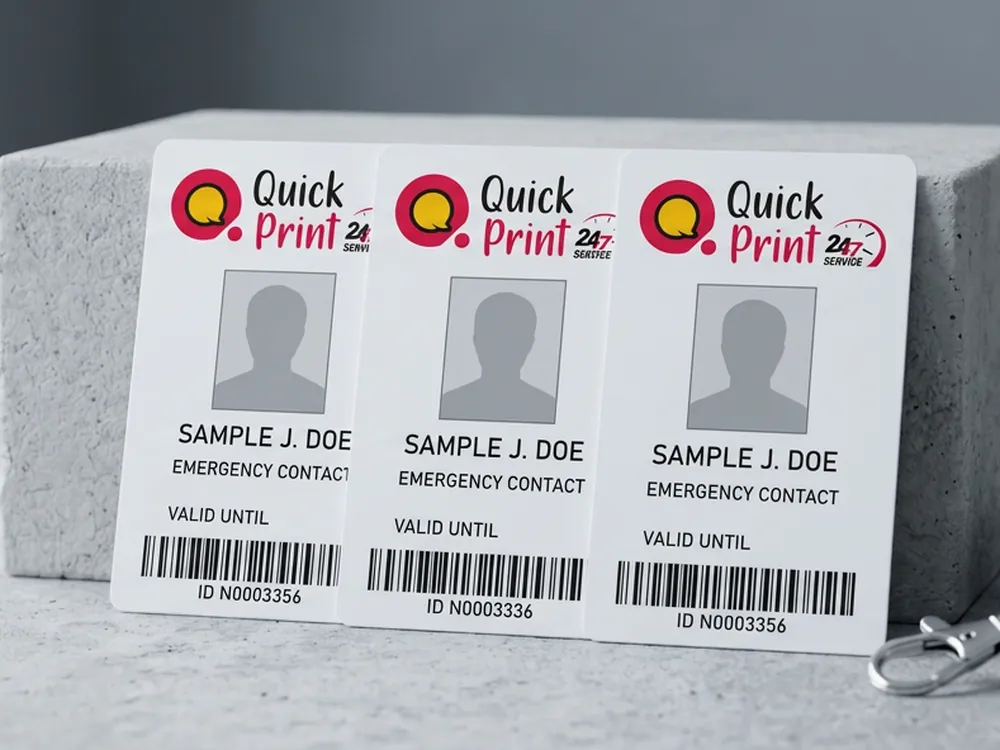
View details
PVC ID & Access Cards
Bank-card-thickness PVC identity cards with photo, barcode and variable data — supplied complete with printed lanyards, holders and clips.
Card thickness, chip type and encoding explained — so you specify an identity card that survives daily use and actually opens your doors.
An identity card is a security document that gets clipped, bent, wiped with sanitiser and dropped every working day for years. Most ID card complaints trace back to two decisions made at ordering: card construction and chip compatibility. Get those right and the batch lasts; get them wrong and you reprint within a year.
| Type | Thickness | Lifespan | Best for |
|---|---|---|---|
| Laminated paper | Varies | 3–6 months | Temporary visitor passes only. Delaminates at the edges. |
| Thin PVC (500 micron) | 0.50 mm | 1–2 years | Short-term staff, event credentials, seasonal workers. |
| Standard PVC (760 micron) | 0.76 mm | 3–5 years+ | Employee and student IDs — recommended default. Same as a bank card. |
| Composite PET/PVC | 0.76 mm | 5 years+ | High-heat environments and heavy daily use. |
| Smart card (chip) | 0.76 mm | 3–5 years | Access control, cashless canteen, attendance systems. |
| Technology | Frequency | Typical use | Notes |
|---|---|---|---|
| Plain PVC — no chip | — | Visual identification only | Lowest cost. Add a barcode or QR for scanning. |
| Proximity (EM4100) | 125 kHz | Basic door access, attendance | Widely deployed, read-only, inexpensive. |
| MIFARE Classic | 13.56 MHz | Access plus stored data | Read/write. Cashless canteen and library systems. |
| MIFARE DESFire | 13.56 MHz | High-security access | Encrypted. Used where security is audited. |
| Magnetic stripe | — | Legacy systems | Being phased out but still required by some installations. |
| Barcode / QR | — | Attendance, event check-in | Cheapest scannable option. Printed, not encoded. |
| Item | Options | Note |
|---|---|---|
| Lanyards | 15/20/25 mm, plain or printed | Safety breakaway clip strongly advised for schools and factories. |
| Holders | Rigid acrylic, soft PVC, open-face | Rigid protects better; soft is cheaper and lighter. |
| Retractable reels | Belt clip or badge clip | Convenient where cards are tapped on readers frequently. |
| Slot punching | Round, oval, vertical | Specify before printing so the punch avoids the design. |
760 micron is the ISO CR80 standard — the exact thickness of a debit card. Anything thinner flexes in a lanyard and eventually cracks at the slot punch. We print by dye-sublimation, which diffuses ink into the card coating under heat rather than depositing toner on the surface, so the print cannot scratch off or peel at the edges the way laminated-paper cards do within months.
For any batch above about fifty cards, the data handling matters more than the printing. Send one spreadsheet with columns for name, employee or roll number, designation or class, department and blood group if required, plus a folder of photographs named to match the ID column exactly. We handle placement, barcode generation and sequential numbering automatically, then return a proof sheet. Check spellings at that stage — a misspelled name on a printed PVC card cannot be corrected, only reprinted.
The most common failure in an ID card order is a card that prints perfectly and then will not open a door. Card readers are frequency-specific and often vendor-locked. Before ordering, either tell us your reader make and model, or send us one working card from your existing system so we can identify the chip. Ordering a thousand cards on the wrong frequency is an expensive mistake and entirely avoidable.
School ID cards have different priorities from corporate ones: they need emergency contact details, house or section identification, a validity year, and above all a breakaway lanyard, because a fixed neck loop on a child is a genuine safety hazard. We produce class-wise batches sorted for distribution, and hold the template so the following academic year needs only an updated student list.
Ready to order? See pvc id & access cards, build a specification with the quote request tool, or review bulk and B2B terms for volume orders.
Bank-card-thickness PVC identity cards with photo, barcode and variable data — supplied complete with printed lanyards, holders and clips.
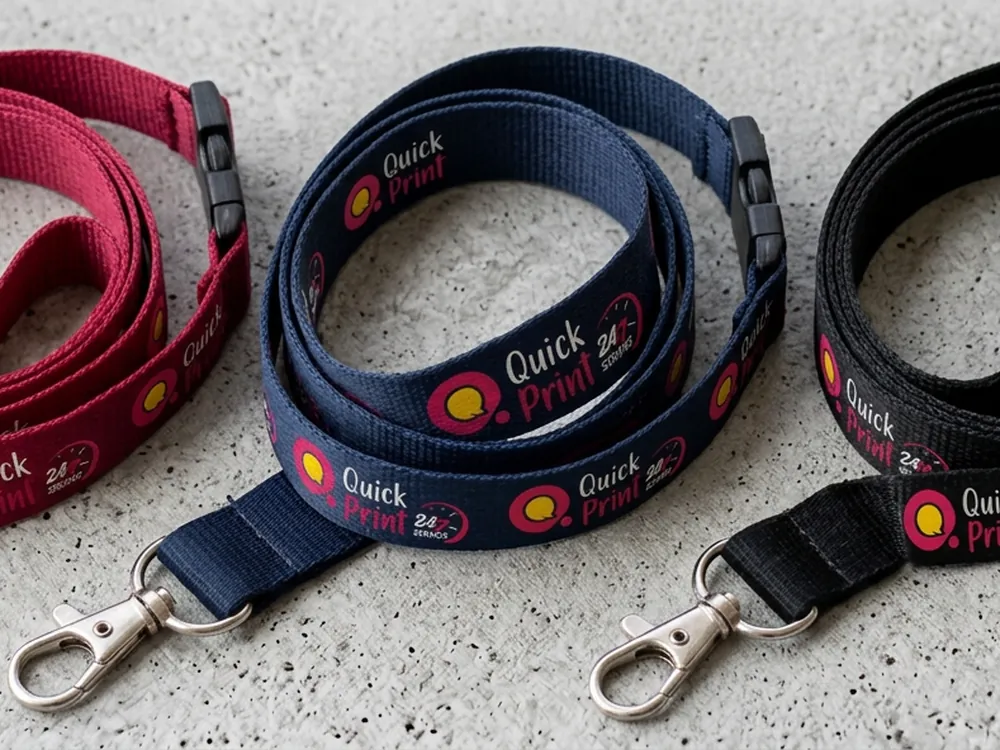
Custom printed polyester and nylon lanyards with safety breakaway clips, supplied plain or matched to your ID cards and event passes.
Laminated paper cards are paper sandwiched in plastic film; they delaminate at the edges within months of daily use. PVC cards are solid plastic printed by dye-sublimation, lasting three to five years or more. For any permanent identity card, PVC is the only sensible choice.
760 micron (0.76 mm) is the ISO CR80 standard thickness — identical to a debit card. Thinner cards flex in a lanyard and crack at the slot punch over time.
In most cases yes. We supply 125 kHz proximity, MIFARE Classic and MIFARE DESFire cards. Send us your reader make and model, or one working card from your current system, and we will confirm compatibility before you commit to a batch.
25 cards. This suits small teams, mid-year joiners and replacement batches without forcing you into a large minimum.
One spreadsheet with name, employee ID, designation and department, plus a photo folder where filenames match the employee ID column. We handle layout, barcodes and numbering, then send a proof sheet for approval.
Yes. Plain and printed lanyards, rigid and soft holders, retractable reels and clips — supplied as a complete kit so procurement handles one invoice rather than four.
48 to 72 hours for a standard batch after data and artwork approval. RFID and MIFARE encoded cards may take slightly longer depending on chip availability.
Yes. Student cards typically carry photo, name, class and section, roll number, blood group, emergency contact and validity year, with a safety breakaway lanyard.
Send the product, quantity and deadline. We will come back with a written quotation and an honest production date.